People are not interchangeable
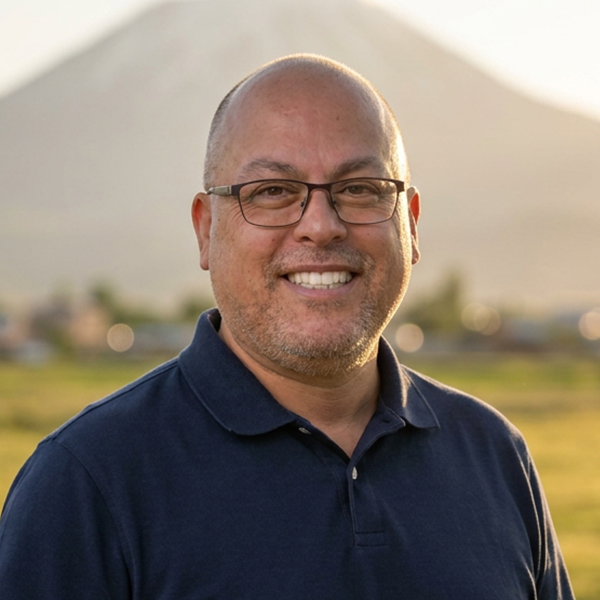
Andrew Jones
Role: founder / public research lead.
Noah’s Ark Scans describes Jones as a software developer and independent researcher, explicitly not an archaeologist or historian. He has spent decades on the site and is a central organizer of the current technical programme.
Fair assessment: he is pushing for more measurement and testing, which is better than relying only on old anecdotes. The critical question is whether the team will publish data that could falsify its preferred conclusion.
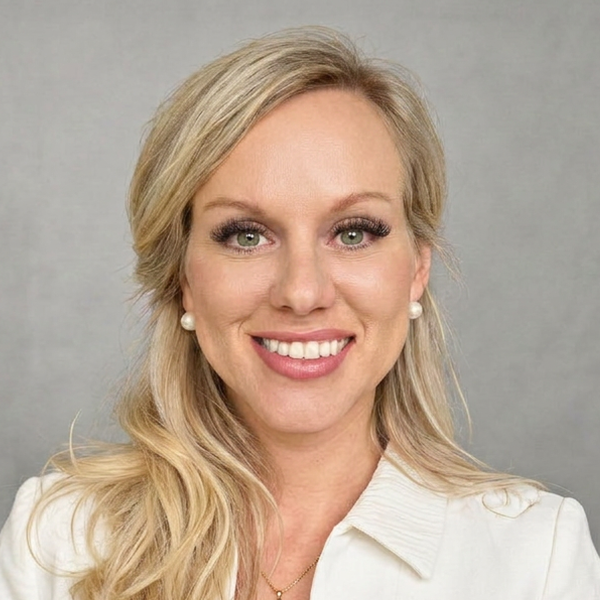
Lauren Witzke
Role: Noah’s Ark Scans lists her as Director of Marketing and Fundraising.
Her public role is not primarily geological. She is a Christian activist, filmmaker and media strategist. Her 2026 fundraising messaging connects the Ark search to broader claims about “evolutionary lies,” “Darwinistic deception” and alleged mass deception around alien disclosures.
Why this matters: those statements are relevant to understanding the communication environment around the research. They are not evidence about the geology itself.
Researchers who deserve a separate category
Cenker Atila
Professor of archaeology at Sivas Cumhuriyet University and director of the 2026 project. His participation does not validate the Ark interpretation; it does make the project more worthy of methodological scrutiny than a purely media-led expedition.
Evrensel Barış Berkant
An archaeologist involved as project vice-president. His archaeological background is directly relevant to evaluating material culture, but participation still does not equal endorsement of every public claim.
Robert Sauer / Logan Hunt / Matúš Barbuščák
The project lists geologists and archaeologists with relevant training. Their work should be evaluated through publications, datasets and field methods—not by guilt-by-association.
Jimmy Corsetti & media amplifiers
Bright Insight and other online personalities help spread the strongest Ark interpretation. Treat their statements as advocacy or commentary unless they provide independently verifiable evidence.
A useful distinction
A person can be sincere and still be wrong. A person can have technical skills and still be biased. A person can also promote a bad claim without committing a legally provable fraud. Good criticism keeps those categories separate.
People are not interchangeable
A responsible investigation separates the people who make claims, the people who collect measurements and the people who independently evaluate them. A promoter can be sincere and still be wrong. A scientist can have a religious commitment and still produce useful measurements. Conversely, a polished title or university affiliation does not automatically validate a conclusion.
Andrew Jones
Andrew Jones is the founder and public face of Noah's Ark Scans. His public argument is that Durupınar deserves renewed scientific investigation and that modern geophysics can test questions that earlier investigators could not resolve. That is a legitimate research proposition. The problem begins when the public presentation moves from “we found anomalies worth testing” toward language that audiences can easily hear as “we found the Ark.”
Jones himself has sometimes acknowledged that radar anomalies alone do not prove an archaeological origin. That qualification is important and should remain visible whenever the site's promotional material is discussed.
Lauren Witzke
Lauren Witzke is listed by Noah's Ark Scans as Director of Marketing and Fundraising . That role matters because she is a prominent public communicator for the project, but it should not be confused with being the project's principal geologist or archaeologist. Her public statements should therefore be evaluated as advocacy, communications and fundraising material unless a specific statement is backed by technical documentation.
Witzke has also expressed political and religious views elsewhere that are controversial and, in some cases, conspiratorial or exclusionary. Those views are relevant to understanding her public persona and the media ecosystem around the Ark campaign, but they are not evidence about the geology of Durupınar. A person's politics cannot prove or disprove a rock formation. The fair criticism is about what a person actually says, how it is presented, and whether the claims are supported.
Cenker Atila
Prof. Dr. Cenker Atila of Sivas Cumhuriyet University occupies a different category. He is an academic researcher involved in the current investigation. That does not make every Ark interpretation correct. It does mean his technical work should be assessed through methods, data and publications rather than by association with a controversial fundraising campaign.
Evrensel Barış Berkant and other researchers
Researchers and technical contributors involved in surveys should likewise be evaluated individually. A person can provide a competent geophysical measurement without endorsing every theological or historical conclusion attached to it. This is why the site distinguishes “research contributor” from “Ark advocate.”
Jimmy Corsetti and media amplifiers
Media figures such as Jimmy Corsetti play a different role again: translating technical or archaeological claims into documentaries, videos and social-media narratives. Their work can make primary material accessible, but it can also compress uncertainty. The closer a presentation is to entertainment, the more carefully viewers should trace its claims back to the original data.
A useful distinction
The central question for every person is simple: What did they observe, what did they infer, what did they publish, and what remains unverified? That standard applies equally to believers, skeptics, academics, journalists and this website itself.
Deep dive: separate expertise from authority
A useful way to assess the people involved is to ask what each person is actually qualified to establish. A geophysicist can be highly competent at interpreting resistivity data without being qualified to identify an ancient ship. An archaeologist can assess material culture without being the best person to process radar. A marketer can communicate a project effectively without providing evidence for its conclusions.
This prevents two opposite errors: dismissing useful technical work because the project has controversial advocates, and treating a technical credential as a blanket endorsement of every Ark claim made around it.
Lauren Witzke: relevance without guilt by association
Witzke's public political and religious statements may be relevant to understanding the project's communication ecosystem, particularly because her formal role is fundraising and marketing. But the fair analytical question is what she actually claims, what source she cites, and whether the claim is supported. Her politics do not make a geophysical measurement wrong.
What would justify calling someone a scammer?
The word “scammer” should be reserved for evidence of intentional deception or a knowingly misleading scheme. A person can be sincerely mistaken, overconfident, sensationalistic or commercially motivated without meeting that threshold. The site's criticism is therefore strongest when it names the documented behavior rather than assigning an intent that cannot be demonstrated.
Sources: Noah's Ark Scans team page ; Lauren Witzke's 2026 fundraising statement ; Jimmy Corsetti example .